What should I put at my front door for feng shui?
Begin with a clear path, working light, visible address, secure hardware, and a flat mat. Add one or two maintained items meaningful to your household rather than copying a universal list.
Quick answer: Good feng shui front door decor begins with a clear, usable entrance. Keep the door easy to open, the path and steps unobstructed, the address and lock visible, and the lighting reliable. Then add a small number of maintained items—such as a mat, paired planters, a wreath, or one meaningful symbol—without treating them as guarantees of luck.
A front entry is both a visual threshold and working equipment. Residents carry groceries through it, visitors look for the bell and address, deliveries need a stable landing, and everyone may need a fast exit. Decoration succeeds when it supports those actions rather than competing with them.
Feng shui traditions differ by school, region, and household. This guide uses a practical sequence: repair and clear first, organize sight lines and lighting second, then choose color, plants, and symbols that fit the building and the people who live there.
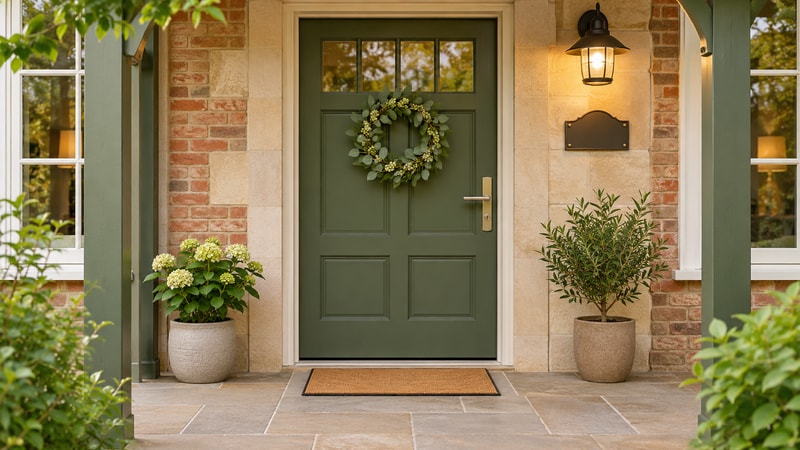
NFPA guidance says exits should remain clear of decorations so escape routes are not blocked. CPSC advises removing obstacles from steps and porches and favors flameless lighting near doorways. These are not feng shui claims; they are practical limits that any entry arrangement should respect.
| Zone | Good candidates | Keep clear | Maintenance test |
|---|---|---|---|
| Door surface | One lightweight wreath, plaque, or removable seasonal accent | Viewer, handle, lock, number, seals, and closing edge | Does it stay secure and quiet in wind? |
| Side wall or console | Address sign, protected light, one artwork, key tray indoors | Bell, intercom, camera view, switches, and access panels | Can every device still be reached and cleaned? |
| Ground and landing | Flat mat and one or two stable planters outside the walking line | Steps, ramps, drainage, door swing, and required landing area | Does water drain and can the surface stay nonslip? |
Think in layers, not item counts. The door is the focal surface; side elements support it; ground elements define arrival. If every zone has several competing objects, the entrance becomes harder to read and harder to maintain.
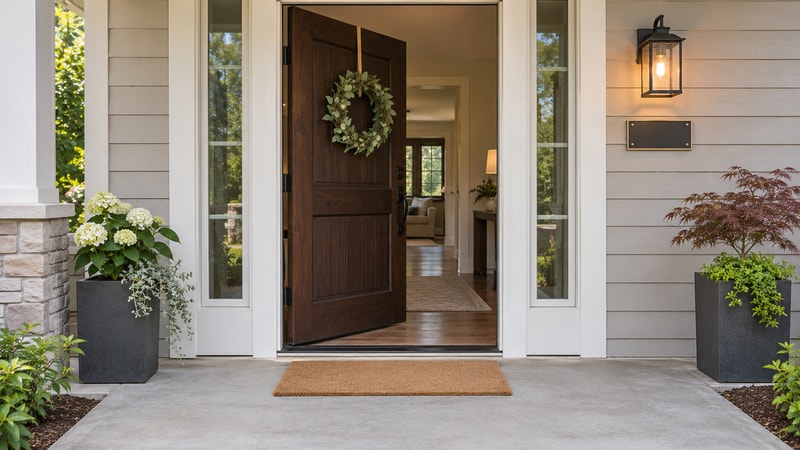
Start with fixed materials: facade, roof, stone, metal, and existing door finish. Choose one dominant door color, one quieter supporting neutral, and at most one small accent. Repetition creates order: a metal finish can recur in the light and number, while a foliage color can recur in a wreath ribbon.
Traditional direction- or element-based color systems exist, but interpretations vary. If you use one, identify the method and apply it after checking architecture, visibility, maintenance, and household preference. The front door color guide discusses meanings and limits without claiming that paint alone changes outcomes.
A mat should lie flat, fit within the landing, catch dirt, drain or dry appropriately, and not interfere with the sweep of the door. Replace a curled, saturated, or shedding mat. Then coordinate its shape and color with the door. The front door mat color guide separates practical selection from symbolic associations.
Plants can soften hard edges and mark the entry, but they need the correct light, climate, watering, container weight, and drainage. One healthy plant is a stronger design choice than several declining ones. Keep thorny, toxic, or strongly allergenic plants away from tight contact zones when residents, pets, or visitors may be affected.
Do not describe potted plants as an air purifier. EPA says there is no evidence that a reasonable number of houseplants removes significant quantities of pollutants in typical homes and offices; overly damp soil can also support microorganisms. Use the front door plant guide to match exposure and upkeep rather than assigning automatic luck.
Entry lighting should reveal the step edge, threshold, number, handle, and visitor’s face without harsh glare. Use fixtures rated for the location and have electrical work handled according to local requirements. Battery-operated accents can be useful for temporary decor, but they do not replace reliable path and porch lighting.
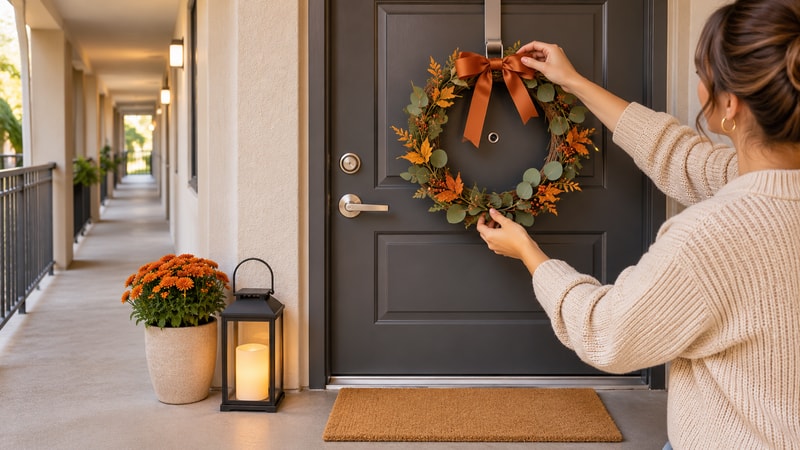
Avoid open flame at the doorway. NFPA and CPSC both warn about combustible decorations and candles near doorsteps. If a lantern is part of the look, use an appropriate flameless light and keep it stable and outside the walking line.
A symbol works best when residents know why it is there: a family craft, seasonal wreath, calligraphy chosen by the household, or object connected to a real tradition. Do not display sacred or cultural objects as anonymous “luck hacks.” Check meaning, orientation, material, and appropriate care with the relevant tradition or practitioner.
The broader front door feng shui guide covers approach, condition, operation, and context. Decoration is one layer of the entry, not a substitute for a working lock, safe landing, or repaired door.
For apartments or rentals, use a door-safe removable hook where permitted, a replaceable ribbon, a freestanding planter outside the required path, or a flat mat approved by the building. Confirm lease, strata, fire-door, corridor, and facade rules before drilling, painting, hanging heavy pieces, or placing items in a shared hall.
| Mistake | Why it fails | Better move |
|---|---|---|
| Filling both sides with large pots | Narrows the approach and increases maintenance | Use one healthy plant or move a pair outside the circulation line. |
| Hiding the number or bell | Visitors and emergency responders lose clear information | Make address and controls the visual priority. |
| Using loose fabric or dried material near flame | Creates avoidable ignition risk | Remove open flame and choose stable, suitable materials. |
| Mixing many symbolic systems | Creates visual conflict and unclear meaning | Use one coherent household story and document any traditional method. |
| Keeping damaged “lucky” objects | Adds clutter and neglect | Repair, clean, relocate, or respectfully retire them. |
Begin with a clear path, working light, visible address, secure hardware, and a flat mat. Add one or two maintained items meaningful to your household rather than copying a universal list.
Symmetry can feel calm, but it is optional. An asymmetrical arrangement works when visual weight is balanced and the path remains clear.
Schools differ on mirror placement. Independently of symbolism, avoid glare, startling reflections, and positions that interfere with visibility or movement.
Not at normal household quantities according to EPA. Choose plants for appearance and biophilic value, then manage light, water, drainage, pests, and allergies.
Limit: This is a safety-first design guide informed by feng shui themes. It does not promise material or health outcomes and does not replace building, fire, accessibility, lease, or electrical requirements.
Get a detailed feng shui report based on your zodiac, birth year and space layout.
View PackagesPowered by Shanyue Group | Contact: contact@shanyuegroup.com
About | Contact | Privacy Policy
© 2026 Shanyue Group • All Rights Reserved