What is the first rule of front door feng shui?
Start with a visible, working and unobstructed entrance. Repair the door and clear the path before adding symbolic colors or objects.
Quick answer: Good front door feng shui begins with a door that is visible, easy to approach, able to open fully, well maintained and connected to a clear interior path. Treat color, compass direction and decorative symbols as later interpretation layers. They should not override safe exit, accessibility, weather protection, security or the daily needs of the household.
In traditional feng shui writing, an entrance is often described as an entry point for qi. That makes the door important, but it does not mean one paint color or ornament can determine health, wealth or luck. A useful front-door review looks at the entire transition from street or corridor to the first usable space inside.
This guide therefore starts with observable conditions: Can visitors find the door? Can a resident use it without stepping around storage? Does the leaf move smoothly? Is the threshold dry and stable? Once those questions are answered, symbolic choices can be added without pretending they replace building maintenance or professional safety advice.
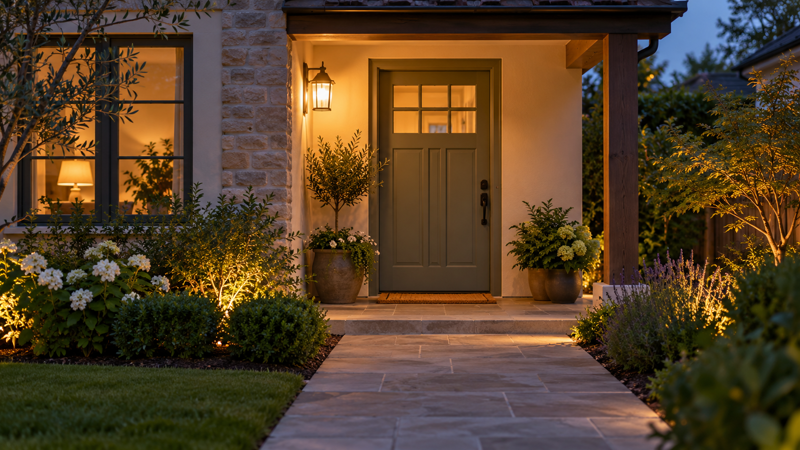
The American Feng Shui Institute’s professional checklist reviews entrance location, size, lighting, exterior condition, open space and circulation together. That is a stronger model than beginning with “What color should my front door be?” because the door, approach, threshold and interior landing affect one another.
Traditional language and practical design can overlap without becoming the same claim. “Allow qi to enter” may be interpreted as keeping the approach open and the interior landing easy to move through. The practical benefit is observable: fewer obstructions, a clearer arrival point and less daily friction. The cultural claim remains a feng shui interpretation, not a measurable guarantee of prosperity.
| Check | What to observe | Practical first action | Feng shui interpretation |
|---|---|---|---|
| Approach | The door is visible and the path is stable, drained and free of trip hazards. | Trim overgrowth, repair loose paving and improve wayfinding. | A clear approach supports an inviting entry. |
| Door operation | The leaf opens fully; hinges, lock, closer and weather seal work. | Repair sticking, scraping, squeaking or loose hardware. | Smooth movement is read as less obstructed circulation. |
| Lighting | Faces, steps, keyholes and the threshold can be seen after dark. | Replace failed bulbs and remove glare or deep shadow. | Balanced light makes the entrance feel active and legible. |
| Threshold | The surface is dry, stable and usable by household members and guests. | Correct leaks, curling mats and abrupt level changes. | The transition into the home should not feel blocked. |
| Interior landing | The door swing and first walking line are not occupied by shoes, boxes or furniture. | Move storage outside the swing and preserve an exit route. | Incoming movement has space to settle rather than collide. |
| Identity and care | The entrance looks maintained and belongs clearly to the home. | Clean the door, repair the finish and use restrained personal details. | Care signals attention to the household boundary. |
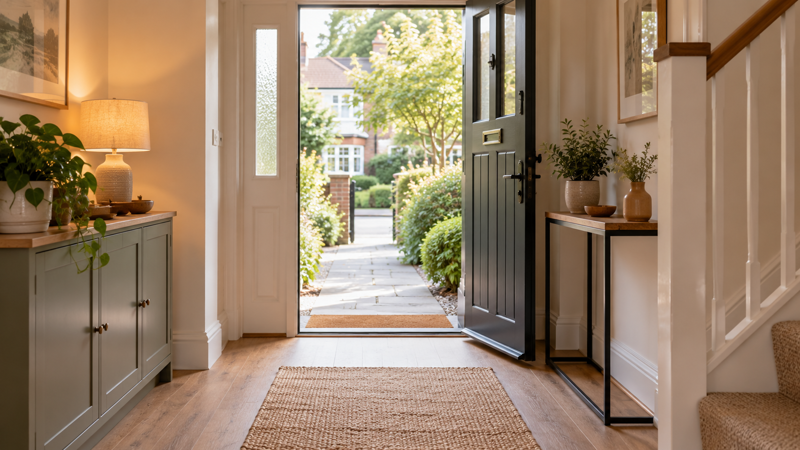
Start with faults that affect every entry: a loose handle, damaged lock, warped door, failing closer, water at the sill, dark step or doormat that curls into the walking path. These are not merely aesthetic problems. They affect security, weather resistance and the ability to enter or leave without hesitation.
NFPA home escape planning advises households to keep doors, windows and exit routes usable and unblocked. A feng shui arrangement should never place a plant, screen, shoe rack, water feature or heavy ornament where it reduces an exit path. In an emergency, clear movement is the priority.
Accessibility also needs a real-user check. The ADA barrier-removal checklist discusses clear opening width, maneuvering space beside a handle and threshold height. Those standards apply to covered facilities and are not a statement that every private residence has the same legal duty. They are still useful prompts: Can a person carrying groceries, using a cane, pushing a stroller or using a wheelchair approach, operate and cross the door?
Color and compass direction are often combined too quickly. They are different questions. Color affects visibility, maintenance, architectural fit and personal preference. Direction belongs to a chosen feng shui method and requires a reliable facing measurement plus context about the building. A generic chart cannot evaluate the whole property.
If the door finish is damaged, first choose a coating suitable for the material and exposure. A beautiful symbolic color that peels in one season is a poor practical choice. For general entrance color maintenance and practical selection factors, use our front door color meaning guide. Keep any Five Element association optional and subordinate to building rules, climate, visibility and the home’s exterior palette.
Do not assume the door alone determines the building’s facing direction. Even feng shui schools differ on how facing, sitting, site form and the active entrance are interpreted. Record which method you are using and avoid presenting one compass-color table as a universal rule.
An entrance becomes crowded when every recommendation turns into an object. Give each item one practical job:
If removing one decorative item makes the entry safer, clearer or easier to clean, removal is the better remedy. Front door feng shui does not require visual density.
Traditional advice often describes this as movement passing through too quickly. Before buying a “cure,” map the real path. If the route is visually abrupt, use existing furniture, a rug or lighting to create a comfortable pause without blocking travel or egress. Do not hang an object where people can strike it.
Check handrails, step visibility, landing depth and whether the door can open without forcing someone toward the stairs. Building safety and local code come first. A light or visual anchor may make the arrival clearer, but it cannot correct an unsafe landing.
Work only within areas you control. Do not obstruct a common hall, fire door, electrical cabinet or accessible route. Focus on the unit door’s hardware, lighting allowed by management, a stable mat if permitted, and the clear space immediately inside.
Use reversible improvements: cleaning, better storage, approved lighting, a stable mat and repair requests for malfunctioning hardware. Get written permission before painting, drilling, changing locks or installing exterior objects.
Start with a visible, working and unobstructed entrance. Repair the door and clear the path before adding symbolic colors or objects.
No single direction is universally lucky for every house. Direction depends on the feng shui method, measurement and building context, and it should never override safety or practical use.
Schools and practitioners differ. Evaluate glare, reflection, circulation and how the mirror is used; do not treat one mirror rule as a guaranteed outcome.
Healthy plants can soften an entrance, but they should not hide the door, reduce light, narrow the path or interfere with the door swing and handrail.
The traditional entrance checklist comes from the American Feng Shui Institute professional checklist. Safety and accessibility prompts come from the NFPA home escape plan and the ADA barrier-removal checklist. Local building, fire, accessibility, rental and homeowners-association requirements take priority over decorative advice.
Get a detailed feng shui report based on your zodiac, birth year and space layout.
View PackagesPowered by Shanyue Group | Contact: contact@shanyuegroup.com
About | Contact | Privacy Policy
© 2026 Shanyue Group • All Rights Reserved