風
fengshuiauspice.com
For office feng shui in a shared room, start with where people walk and what each person needs at their desk. Mark the door swing, the route to storage and the window. Then test desk positions for an easy approach, comfortable screen viewing and room to move a chair.
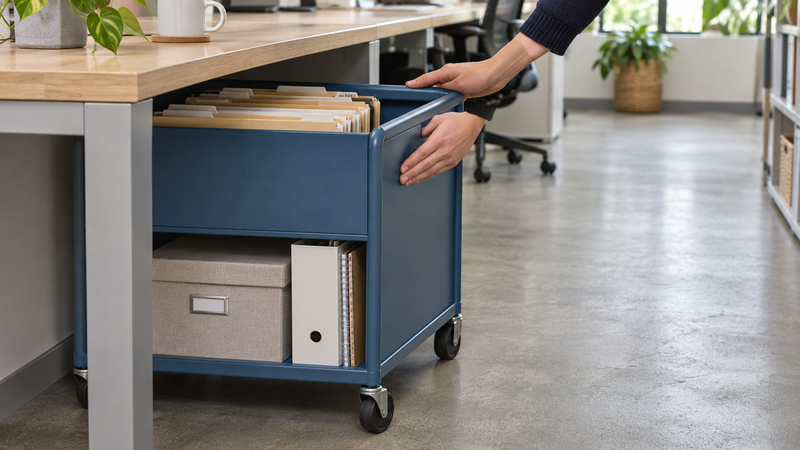
Sketch the room and trace a route from the door to each desk and to shared equipment. Give special attention to a printer people visit often and a drawer that opens into the aisle. Sit in each position and have another person walk through the room. That small test can reveal a tight turn that a plan on paper misses.
Have both occupants sit down at the same time, then try a common trip to the printer. A clear route when both chairs are tucked in can become awkward as soon as one person leans back or opens a drawer. Check how each person enters and leaves before choosing which wall to use.
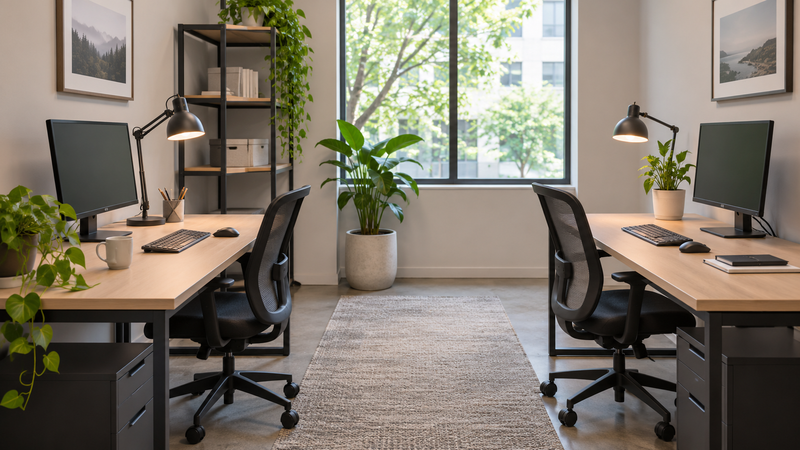
Imagine a narrow office with the door at one end and a bright side window. Try putting both screens at right angles to the window and then sit at each desk to compare reflected light. OSHA’s workstation guidance describes reorienting screens relative to bright windows and using blinds as practical glare controls. Test again later in the day if the window gets direct sun. OSHA workstation guidance
If the seat nearest the window still gets glare, try adjusting that screen or its blind before swapping both desks. If one chair blocks access to the other, try moving the desks along their walls instead of moving one into the middle of the room. Test one change at a time so each person can tell what improved.
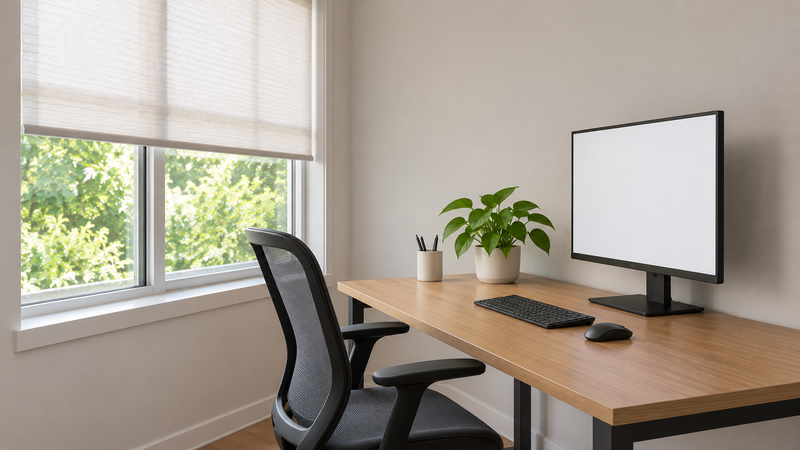
Traditional feng shui includes interpreting the surroundings when siting a building. The Metropolitan Museum of Art describes that historical practice in its Chinese garden resource. The desk choices here are a way to discuss preferences in a shared room. In a shared office, someone may prefer a desk where the door is easy to see. After testing circulation and glare, see whether a slight rotation or a side view of the door also works for the person at the other desk. The Met on Chinese garden siting · Office desk placement checks
If one person likes to see the entrance and the other wants less movement in their field of view, each can favor a different sightline. Ask which seat works for which person after checking that neither seat narrows the shared route.
Turn the monitor, move a storage cart out of the path or try a blind adjustment before asking to relocate furniture. Test the change with both occupants during normal work. If you are arranging one workstation at home, use the home office layout guide for a room with different constraints.
Try an adjustment at that workstation first, such as changing the screen angle or using a blind. Recheck the screen during the brightest part of the workday and make sure the shared route stays clear.
Get a detailed feng shui report based on your zodiac, birth year and space layout.
View PackagesPowered by Shanyue Group | Contact: contact@shanyuegroup.com
About | Contact | Privacy Policy
© 2026 Shanyue Group • All Rights Reserved