風
fengshuiauspice.com
Kitchen feng shui is most useful when it helps you notice how the room actually works: safe movement, ventilation, lighting, storage, heat, water, and daily cleaning. Symbolic ideas can guide attention, but they should never override appliance instructions, fire safety, plumbing, or food hygiene.
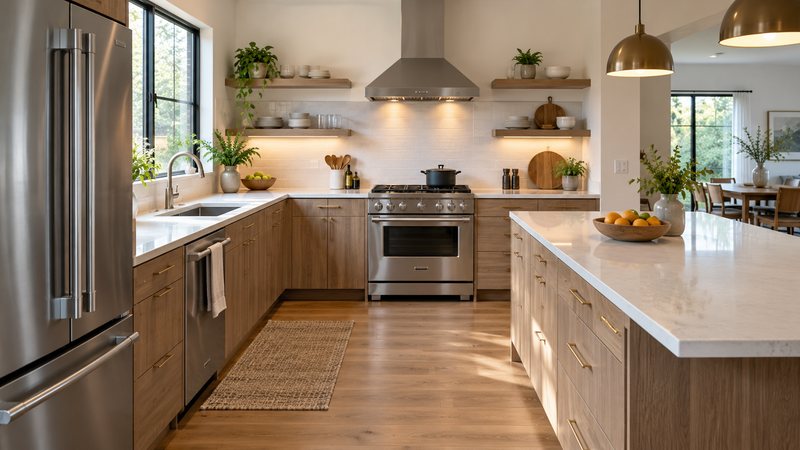
Keep the route between refrigerator, sink, preparation area, and stove direct and unobstructed. Give the cook a stable working position, control smoke and moisture, light the work surfaces, and keep frequently used tools accessible without covering the counters.
The familiar kitchen work triangle is not a strict feng shui rule, but it is a useful way to spot unnecessary walking and collisions. In a galley or one-wall kitchen, the same idea becomes a sequence: storage, washing, preparation, cooking, and serving. Open appliance doors and drawers during the review. A plan that looks spacious can fail when the dishwasher blocks the sink route or the refrigerator door closes the main passage.
Keep the entrance and major walkway outside the cook’s immediate working zone where possible. If the stove faces away from the room, a reflective backsplash or a carefully placed view into the room may improve awareness, but it should not introduce glare or distract from safe cooking.
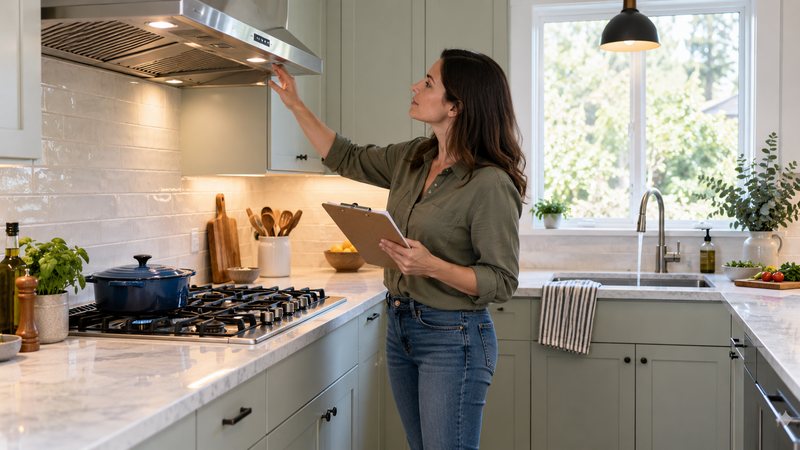
Traditional feng shui often describes the stove as fire and the sink as water. A practical interpretation is to give both work zones enough landing space and avoid a cramped confrontation where splashing, hot cookware, and people compete for the same counter. Do not move plumbing or gas solely for symbolism; first check the manufacturer’s instructions and qualified-trade requirements.
Ventilation matters because cooking can add particles, odors, heat, and moisture to the home. Use the range hood as designed, keep filters maintained, and provide makeup air or window ventilation where appropriate. The U.S. EPA indoor air quality resources provide a broader starting point, while the appliance manual and local code govern the actual installation.
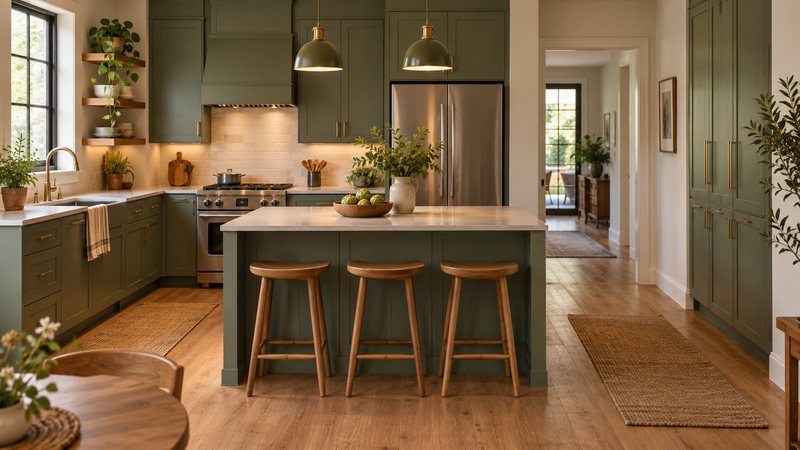
Clutter is not a moral failure or a mystical cause of bad luck. It is a signal that an item lacks an accessible home. Store daily tools close to their task, move rarely used appliances away from the preparation area, and keep combustibles clear of heat sources. Closed storage can make a small kitchen calmer, but open shelves work when objects are stable, easy to clean, and not overloaded.
See Feng Shui Kitchen Layout Mistakes and Practical Corrections for a detailed article, Home Feng Shui for room-level navigation, and Feng Shui Tips for the complete article archive.
There is no universal distance that applies to every kitchen. Provide safe landing space, prevent splashing near heat, and follow the appliance and local installation requirements.
No. It is sometimes suggested for awareness, but reflective surfaces can create glare and cleaning problems. Use it only when it improves the real room.
Choose colors for available light, materials, cleaning needs, and the rest of the home. No single color guarantees health or prosperity.
Powered by Shanyue Group | Contact: contact@shanyuegroup.com
About | Contact | Privacy Policy
© 2026 Shanyue Group • All Rights Reserved