風
fengshuiauspice.com
In this site’s modern feng shui layout guidance, a solid wall behind the headboard is the preferred design convention, while a window behind it is treated as less supportive. That is an editorial convention used on this site, not proof that all feng shui schools agree or that the position causes illness or bad luck. Move the bed only if another arrangement improves the room overall. If it cannot move, address measurable problems such as streetlight, noise, drafts, privacy, or blocked window access, and use a stable headboard and suitable curtains where they help.
People use “bed under a window” to describe a few different arrangements. The headboard may sit directly below the window; the bed may touch the same wall while the window is off to one side; or the bed may simply be close to a window. Those positions do not create the same practical conditions. Start by checking where the head and pillows sit, whether the window opens safely, and whether light, sound, or cold air reaches the sleeping area.
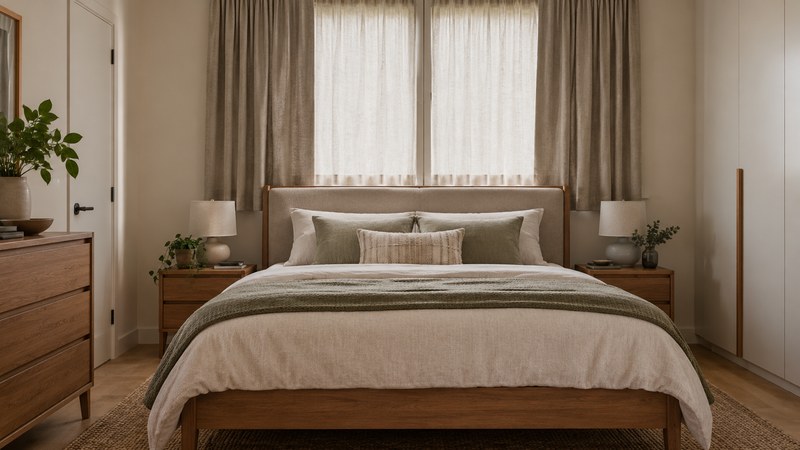
This site’s bedroom-layout guide uses a solid wall behind the headboard as a modern design convention because it creates a clearer physical boundary. Within that site-specific framework, a window behind the headboard is treated as less supportive. This wording describes the editorial approach used here; it does not claim a universal rule shared by every feng shui school or practitioner. The site’s feng shui bedroom layout guide covers the wider relationship among the bed, door, and room layout.
Before rearranging furniture, sketch the room and mark the door swing, window, heater or vent, outlets, wardrobes, and walking paths. Then compare realistic options rather than trying to satisfy one rule in isolation.
| Check | What to compare |
|---|---|
| Headboard support | Is there a practical position with the headboard against an uninterrupted wall? |
| Door view and circulation | Can you see the entrance without putting the bed in the way of the door or the main path? |
| Window function | Can the window still open, be reached, and be used as intended? |
| Sleep disruption | Do light, noise, temperature, or air movement actually disturb you at this position? |
| Room constraints | Would moving the bed block storage, access, heating, or another occupant’s route? |
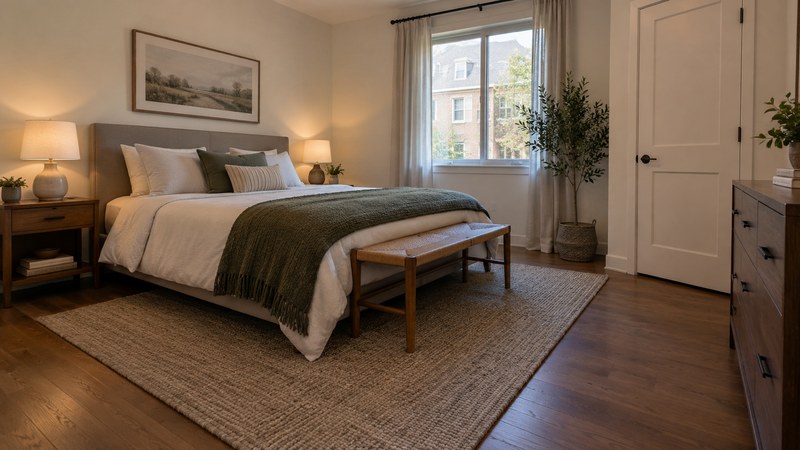
If the alternative blocks the door, crowds the room, places the bed beside a noisy appliance, or makes the window inaccessible, it may be a worse practical choice. Feng shui can be one lens for organizing a room; it should not override safe egress, stable furniture, accessibility, or the needs of the people using the bedroom.
Small rooms, rental restrictions, and multiple doors can leave only one workable bed position. You do not need to force a major renovation to respond to the traditional concern. First identify what, if anything, is bothering you in everyday use.
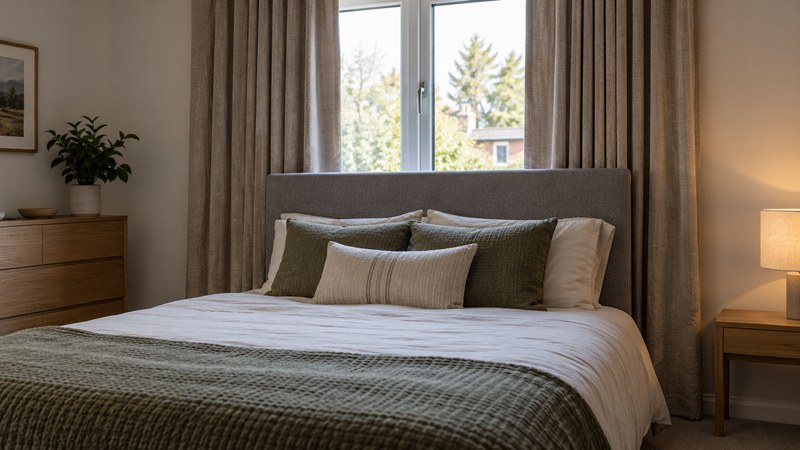
NIOSH guidance supports controlling light and noise for a better sleep environment. It does not say that a bed under a window is inherently harmful, and it does not validate claims about luck, energy, or health outcomes from bed placement. Keep those ideas in their proper category: traditional interpretation versus evidence-based sleep-environment advice.
Try a different position if it gives the headboard a solid wall, leaves the entrance and walking route usable, and keeps the window safe and functional. Keep the current position if every alternative creates a larger practical problem and you are sleeping comfortably. If you are unsure, test one reversible change at a time for several nights and judge the result by comfort, light, noise, temperature, and access—not by a promise that a placement will change your fortune.
For the broader layout, compare this decision with the site’s bedroom layout guide and Feng Shui Auspice home page. For sleep-environment recommendations, see the CDC / NIOSH guidance on improving sleep.
This site’s modern layout guidance prefers a solid wall behind the headboard and treats a window there as less supportive. That is a site-specific design convention, not a universal school rule or evidence that the position causes bad luck or illness.
Not automatically. Compare the complete room: door access, walking space, window use, heating, storage, and actual sleep disturbances. A technically different placement is not an improvement if it creates a more serious everyday problem.
A stable headboard can provide a more substantial physical boundary and may feel more comfortable. It does not make every traditional school agree about the placement, and it should not block window operation or safe access.
Curtains can reduce incoming light and may improve privacy. Opaque coverings are also among NIOSH’s practical suggestions when light entering the bedroom is disruptive. They do not prove or correct supernatural effects.
No. A window beside the bed may affect light, noise, or temperature differently from one directly behind the headboard. Describe the exact arrangement before applying a rule.
Use feng shui as a traditional design framework if it is meaningful to you, while prioritizing stable furniture, safe window access, clear circulation, and a sleep environment that works for you.
Get a detailed feng shui report based on your zodiac, birth year and space layout.
View PackagesPowered by Shanyue Group | Contact: contact@shanyuegroup.com
About | Contact | Privacy Policy
© 2026 Shanyue Group • All Rights Reserved