風
fengshuiauspice.com
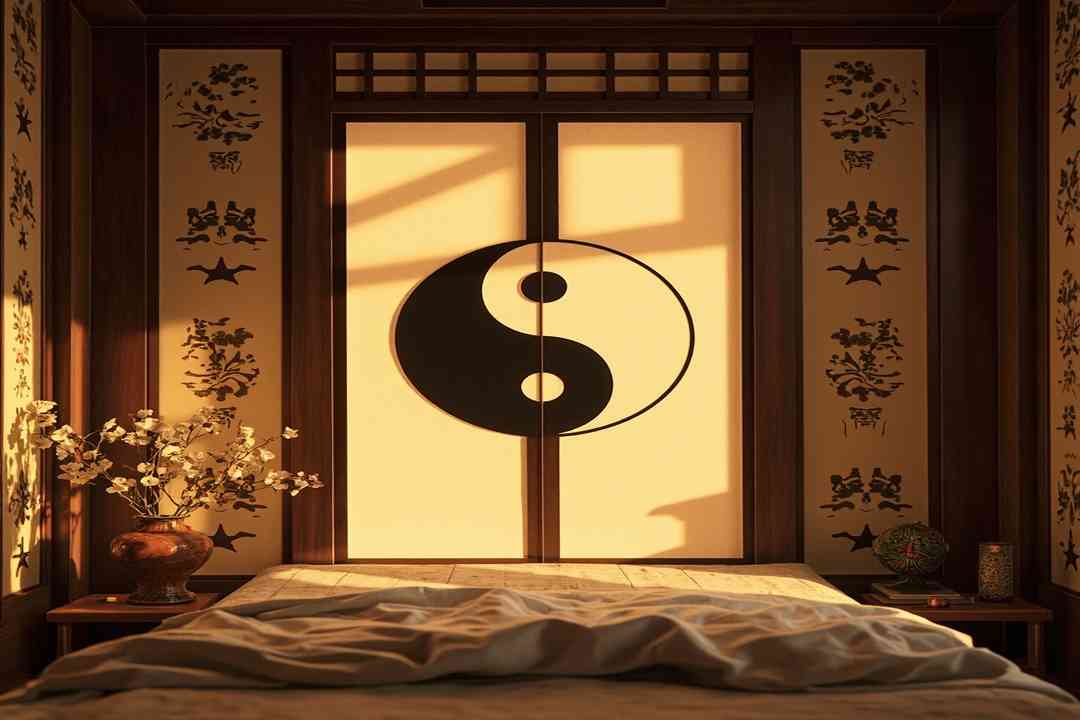
Feng shui Bed Facing Door Feng Shui is one of the most powerful yet commonly misunderstood concepts in traditional Chinese space arrangement. When your bed faces the bedroom door directly, the energy flow—called qi—enters your private sanctuary without pause, disrupting restful sleep and creating subconscious tension.
Bed Facing Door Feng Shui usually refers to a bed placed directly in line with the bedroom door. In traditional feng shui, this layout can feel exposed, so the practical goal is to create a calmer sleeping position or soften the direct line of movement.
| Room area | bedroom layout |
|---|---|
| Main concern | direct door-to-bed alignment |
| Simple fix | move the bed, angle it, or add a soft visual buffer |
| Best priority | comfort, privacy, and practical sleep quality |
Quick reference: Use this page as a bedroom checklist: first confirm whether the bed is truly aligned with the door, then apply the least disruptive fix before changing furniture or decor.
This guide breaks down exactly what Bed Facing Door Feng Shui means, how the Five Elements interact with it, and provides five concrete fixes you can apply today. Whether you are rearranging a new home or troubleshooting sleep issues, understanding Bed Facing Door Feng Shui gives you actionable control over your bedroom’s energy.
Bed Facing Door Feng Shui refers to the placement of a bed so that its headboard or entire bed frame aligns directly with the bedroom door. In feng shui theory, doors serve as the primary entry points for qi to enter a home.
When a bed sits directly in this energy pathway, the incoming qi rushes past the sleeper without gentle circulation. This creates what feng shui masters call “sha qi,” or harsh energy.
The sleeper experiences this as restlessness, frequent waking, anxiety, or even health issues affecting the nervous system. The concept extends beyond mere sleep quality—traditional practitioners believe this alignment can impact relationships, career prospects, and overall vitality over time.
The core principle behind Bed Facing Door Feng Shui involves understanding how energy moves through spaces. Doors function as “mouths” that inhale and exhale qi throughout the home.
A bed positioned in the direct path of this flow essentially places the sleeper in the trajectory of constant energy bombardment. This differs from doors positioned to the side of the bed, where qi can circulate more gently around the sleeper.
The specific term “chong sha” (crushing harm) describes this problematic alignment in classical feng shui texts. Even modern interior designers who dismiss feng shui as superstition often acknowledge that beds facing doors feel psychologically uncomfortable—a reflection of the ancient wisdom embedded in these placement rules.
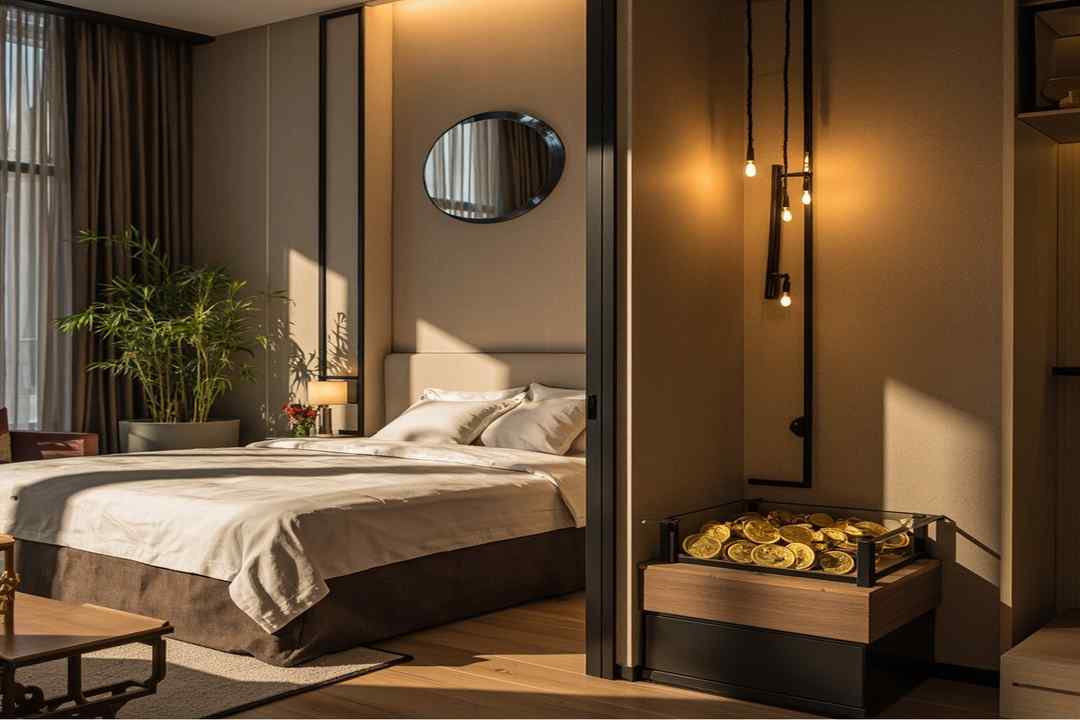
The Five Elements—Wood, Fire, Earth, Metal, and Water—provide the framework for balancing Bed Facing Door Feng Shui issues. Each element corresponds to specific colors, materials, and directions.
When a bed faces a door, the elemental relationship between the door’s position and the bed’s orientation determines whether the energy imbalance can be corrected naturally. The element associated with the direction your door faces will clash with or support the element of your bed’s placement.
For instance, if your door faces south (Fire element) and your bed sits in the north sector (Water element), the Fire-Water conflict intensifies the negative energy from direct alignment.
To soften Bed Facing Door Feng Shui problems, practitioners introduce colors and materials representing supporting elements. Earth elements (yellow, brown, ceramic, stone) can ground rushing energy.
Metal elements (white, gray, metallic objects) can help redirect and contain energy flow. Adding a wooden element (green, plant life, wooden furniture) between the door and bed creates a natural buffer.
The key is identifying which element dominates your door’s direction, then introducing a controlling element to create balance. For example, a south-facing door (Fire) benefits from water elements (blue, black, glass) or earth elements (yellow, brown) to suppress excessive fire energy rushing toward the bed.
Practical elemental adjustments for Bed Facing Door Feng Shui include placing a tall plant (Wood) between the door and bed to absorb and slow incoming qi. A small water fountain or aquarium near the door introduces the Water element to calm fire-direction energy.
Crystal or metal wind chimes hanging near the door frame can help disperse harsh energy before it reaches the bed. Earth elements like a ceramic vase or stone sculpture placed in the line of sight between door and bed provide grounding energy.
Choose the element that addresses your specific door direction for maximum effectiveness.
Applying Bed Facing Door Feng Shui requires examining your bedroom layout and making strategic adjustments. Here are five actionable tips you can implement immediately:
Tip 1: Reposition the Bed (Best Solution)
Move the bed so it does not sit directly in line with the door. The ideal placement places the head of the bed against a solid wall, facing into the room at a diagonal angle from the door.
This positioning allows you to see the door without being in its direct energy path. Bed Facing Door Feng Shui If the room layout prevents full repositioning, even shifting the bed 12-18 inches to either side often creates meaningful improvement.
Tip 2: Install a Solid Headboard
A solid wooden or upholstered headboard provides a protective barrier behind the sleeper. Choose a headboard in earth tones (brown, tan) or wood finishes to add grounding energy.
Avoid metal headboards with open slats, as these allow energy to pass through. Bed Facing Door Feng Shui The headboard should extend at least six inches above the mattress surface for adequate protection.
Tip 3: Use a folding Screen as a Room Divider
Place a folding screen (available in wooden or fabric frames) between the foot of the bed and the door. This creates a visual and energetic barrier without blocking the entire room.
Position the screen at a 45-degree angle to the door rather than perfectly perpendicular for smoother energy flow. Bed Facing Door Feng Shui Choose screens with solid panels rather than overly intricate designs.
Tip 4: Hang a Bagua Mirror Outside the Door
For severe Bed Facing Door Feng Shui situations, hang a bagua mirror outside the bedroom door (never inside the bedroom) to deflect incoming sha qi. The convex mirror version reflects energy away rather than absorbing it.
Mount it at eye level on the door frame’s upper corner, angled slightly outward. This cure works best when combined with internal bedroom adjustments.
Tip 5: Apply the “Command Position” Principle
The command position places the bed where you can see the door without being directly in line with it. This applies Bed Facing Door Feng Shui principles while maintaining psychological comfort.
Sit on your bed and verify you can see the door without straining. If you cannot see the door from the bed, use a mirror positioned to reflect the door’s presence.
The Bagua map divides a space into nine zones, each corresponding to different life areas. Bed Facing Door Feng Shui primarily affects the Zhen (Thunder) gua, located at the front-left of the Bagua map when using the compass method.
This zone governs family, health, and new beginnings. When a bed faces the door directly, the Zhen area receives overwhelming energy that disrupts its balanced function.
The rushing qi essentially “drowns” the subtle energies intended to support family relationships and personal growth.
The relationship between Bed Facing Door Feng Shui and the Bagua map also involves the Door location itself. If your bedroom door falls into other gua areas (such as Qian for career or Kun for relationships), the direct alignment creates additional complications.
For example, a door in the Xun (Wind) gua (wealth area) pointing directly at the bed can create financial instability or excessive focus on material matters at the expense of rest. Understanding which gua your door occupies helps prioritize which life areas need correction.
Using the Bagua map alongside Bed Facing Door Feng Shui analysis involves checking both the bed position and door location. Map your bedroom using the compass method—stand at the center facing north to align the Bagua correctly.
Identify where your door falls within the nine zones. Then assess whether your bed’s position creates problematic energy paths through these zones.
This dual analysis provides more precise adjustment recommendations than addressing door-to-bed alignment alone.
One common mistake involves placing the bed as far from the door as possible, which often puts the head against a window. This creates another feng shui problem—energy escaping through windows replaces the original door issue.
The goal is balanced positioning, not maximum distance. Another error is using a mirror to reflect the door, which can work temporarily but often creates visual tension and additional energy disturbance.
Bed Facing Door Feng Shui Mirrors should complement other cures rather than serve as standalone solutions.
Many people also misunderstand the “never face the door” rule. The guideline applies specifically to direct alignment, not to beds positioned at angles that allow the sleeper to see the door.
In fact, being able to see the entrance from bed provides psychological security and actually supports good feng shui. The problem occurs only when qi rushes directly along the bed’s length toward the sleeper’s body.
this energy pattern Additionally, some practitioners overcorrect by completely blocking the bedroom door with furniture, which creates stagnant energy and practical hazards.
A third mistake involves ignoring the bedroom door’s style and condition. A solid, well-fitted door performs better energetically than one with gaps, cracks, or damage.
Hollow-core doors allow more energy leakage than solid wood doors. Replacing a problematic bedroom door or adding weather stripping can improve the flow without any bedroom rearrangements.
Physical symptoms often indicate balanced qi problems before you consciously notice the layout issue. Waking frequently between 1-4 AM suggests liver or gallbladder meridian disruption, which feng shui associates with eastern-aligned doors and beds.
Chronic fatigue despite adequate sleep, unexplained anxiety, or restlessness when lying in bed points to energy disturbance. Recurring nightmares or vivid dreams involving being chased or attacked correlate with sha qi from direct door alignment.
Visual signs include seeing the bedroom door directly from your pillow position. Stand at your bed’s pillow location and look toward the door—any part of the door visible in direct line indicates potential imbalance.
Check whether the door opens inward toward the bed, which intensifies the rushing energy effect. Sliding doors or doors with windows also create different energy patterns than solid doors.
home energy Take photos of your bedroom from the bed’s perspective to analyze the alignment objectively.
Relationship symptoms sometimes manifest as well. Couples experiencing persistent tension, difficulty conceiving, or feeling “watched” during sleep may have this arrangement issues.
While these correlations lack scientific proof, many practitioners observe patterns across client cases. If you have tried other solutions without improvement, examining your bed’s relationship to the door often reveals the hidden factor.

Not always. The concern is strongest when the bed is directly in line with the door and the sleeper feels exposed. If the room feels calm and practical, a small buffer may be enough.
The easiest fix is to move the bed slightly out of the direct door line. If that is not possible, use a screen, curtain, bench, rug, or stable bedside setup to soften the direct path.
A mirror is not the first choice because it can add visual activity in a bedroom. A calmer object, softer lighting, or a furniture adjustment usually works better.
Yes, but it should be applied practically. In a small room, focus on making the bed feel protected and comfortable rather than forcing a layout that blocks movement.
No. Feng shui adjustments should support comfort, safety, and daily use. If a change makes the room harder to use, choose a lighter adjustment instead.
The most important principle for this energy pattern is achieving balance between protection and openness. Your bedroom should feel like a sanctuary where energy flows gently rather than rushes aggressively.
Test different arrangements by sleeping in each position for a few nights—you often sense intuitively which placement supports deeper rest. Trust that observation alongside the feng shui guidelines, and remember that small adjustments compound into significant improvements over time.
Your sleep quality and daily energy reflect whether your bed and door work together harmoniously.
Begin with the simplest fix available to you today. Even shifting your bed a few inches or adding a single plant between door and bed starts the energetic shift. As you refine your bedroom’s arrangement, you create a space where restorative sleep supports every other aspect of your life.
The ancient wisdom of the flow offers practical tools—use them to transform your personal sanctuary into a place of genuine rest.
How to Use Feng Shui Bedroom Bed Position in a Real Home Feng Shui Remedies: Common Mistakes and Practical Fixes How to Use Feng Shui Bedroom Door Placement in a Real Home WikipediaGet a detailed feng shui report based on your zodiac, birth year and space layout.
View PackagesPowered by Shanyue Group | Contact: contact@shanyuegroup.com
About | Contact | Privacy Policy
© 2026 Shanyue Group • All Rights Reserved