Feng shui for productivity is most useful when it leads to a specific question about your work: what is difficult now, what arrangement might help, and what would count as an improvement? A favorable direction, tidy photograph or new ornament does not by itself show that you completed better work. Separate a traditional interpretation from an observable result.
This guide suggests an informal way to compare one reversible workspace change. It is not a controlled study, a traditional feng shui calculation or a promise of higher income. Its purpose is modest: help you decide whether an arrangement is useful for the task you actually do, without turning one good afternoon into proof of a universal rule.
Begin with a normal piece of work rather than a decorating goal. Reviewing a document, making customer calls and handling visitors place different demands on a room. “More productive” needs a meaning that fits that task. A quieter position may suit one activity while making another less convenient.
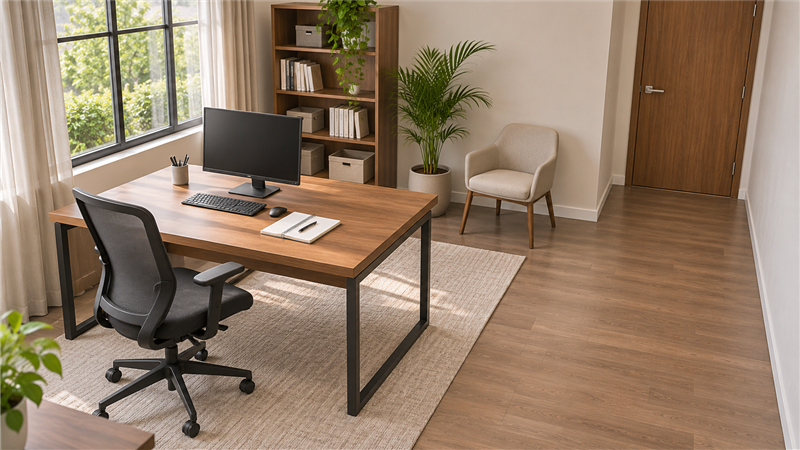
Define the work outcome before choosing a direction
A Singapore Public Service Division feature with practitioner Cliff Tan contrasts quiet positions for focused work with more interactive settings for public-facing activity. It also says feng shui cannot guarantee success or a specific outcome. The feature presents a practitioner’s approach, not a controlled trial establishing a productivity effect.
Translate your own goal into something you can check. For document review, that might be finishing a defined section and checking its corrections. For calls, it might be locating the required information without repeatedly reaching behind the chair. Do not compare these tasks using one crude total such as messages sent.
Keep quality alongside quantity. A faster draft that needs extensive repair may not be a better outcome. Choose a small, ordinary work unit and note what “finished” means before changing the room. These are suggested working definitions, not categories inherited from a feng shui school.
Check practical basics before running a comparison
OSHA’s monitor guidance treats screen placement together with the keyboard, desk and chair. It recommends positioning a monitor directly in front of the user and considering window glare. A symbolic arrangement should not require you to twist away from the task or accept an unreadable screen.
Check access as well. Keep the normal route usable, leave room for the chair and avoid creating a cable obstruction while moving equipment. If the actual problem is an overloaded drawer or a lamp reflected on the screen, use our office storage guide or office lighting guide for that specific arrangement.
Do not improve a tally by eliminating appropriate breaks. The UK Health and Safety Executive’s screen-work routine guidance emphasizes breaks or changes of activity and opportunities to move or change posture. That is occupational guidance, not evidence for a lucky desk direction.
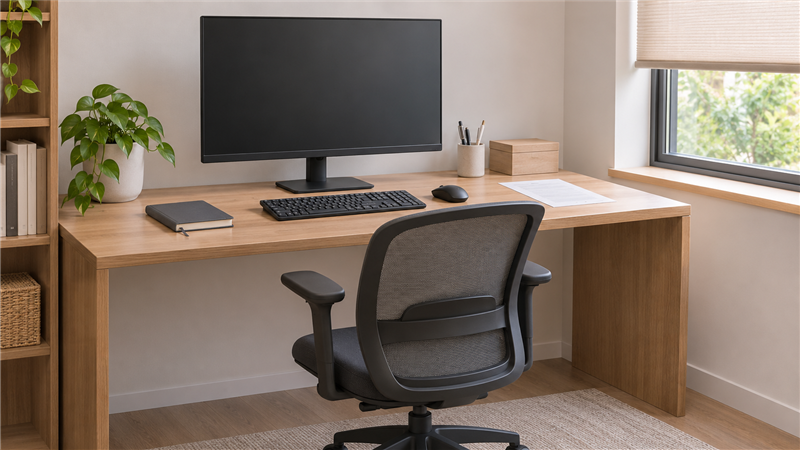
How to try one reversible workspace change
First, use the current arrangement for a normal session and write down the problem. Then select one change that addresses it. For example, try a different available seat for a reading task if the current one is beside a busy route. Keep the furniture safe and follow the room’s shared-use rules. This is a proposed example, not a report that such a move has been tested here.
Change one main feature at a time where practical. If you move the desk, change the task, replace the monitor and silence every notification together, you will have little basis for deciding which detail mattered. You may still prefer the result, but that preference does not identify its cause.
Use comparable work and similar session conditions when possible. Note major differences rather than hiding them: an urgent deadline, a visitor interruption or a much easier assignment can matter more than the position of the chair. You do not need to manufacture a perfect experiment to keep honest notes.
Keep a small comparison record
| Record | Before the change | After the change |
|---|---|---|
| Task and finish criterion | Name the work unit and required quality. | Use comparable work; record important differences. |
| Main arrangement | Describe the original seat, view or access problem. | Describe the single adjustment. |
| Interruptions and conditions | Note calls, visitors and unusual demands. | Note them again rather than assuming equality. |
| Outcome | Record completion, corrections and practical difficulty. | Record the same observations. |
The table contains prompts, not invented results. Keep confidential work and other people’s details out of photographs or public notes. A short description such as “screen reflection made this paragraph difficult to read” is more useful than an unsupported energy score.
Repeat the comparison over more than one ordinary occasion before deciding whether to keep a change. There is no validated number of sessions prescribed here. Choose a manageable review point for your work, and record inconsistent results rather than extending the trial only until you get the answer you wanted.

Read the result without claiming more than it shows
If the arrangement repeatedly makes a practical task easier, you have a reason to keep it for that task. Say what improved: a document is easier to see, the needed tool is within reach, or the chair no longer obstructs a colleague. You do not need to add a claim about wealth or invisible forces to describe that benefit.
If results vary, keep that uncertainty. Work difficulty, expectations and daily circumstances can change. An informal personal comparison cannot establish that feng shui caused an improvement or that everyone should use your layout. It can still help you make a small, reversible decision about your own space.
Productivity questions
Is there one scientifically proven productive desk direction?
The sources used here do not establish one. A practitioner’s arrangement advice and an ergonomic recommendation are different kinds of evidence; neither makes a universal compass-direction result.
Should I buy an ornament before testing my workspace?
No purchase is required for the informal comparison described here. Begin with the actual task and an available, safe adjustment. A decorative preference is not proof of improved work.
Does one successful session prove that feng shui worked?
No. It records one outcome under particular conditions. Repeat comparable work, note differences and describe any practical benefit without treating the observation as a causal study.