Quick answer
Feng shui living room colors work best as a practical palette: start with one quiet base color, repeat one or two supporting tones from the existing floor and furniture, then add a limited accent color. Traditional associations can help you describe the mood you want, but they do not produce guaranteed luck, wealth, or health. Test every color in the room’s daylight and evening lamps before buying paint or large furniture.
Basic facts
| Decision | Useful starting point | What to check |
|---|---|---|
| Main wall color | Warm white, soft beige, pale gray-green, or another low-intensity neutral | Daylight, floor undertone, glare, and how the room looks after sunset |
| Accent color | One stronger tone in cushions, art, a chair, or a single wall | Repeat it in two or three small places so it looks intentional |
| Five-element reference | Use it as a traditional symbolism layer | Schools differ; color alone does not determine a room’s feng shui |
| Lighting | Compare samples under the lamps you actually use | Bulb color temperature and color rendering change appearance |
| Small room | Keep most large surfaces light or mid-value | A dark accent can work if circulation and task lighting stay clear |
Begin with the room you have
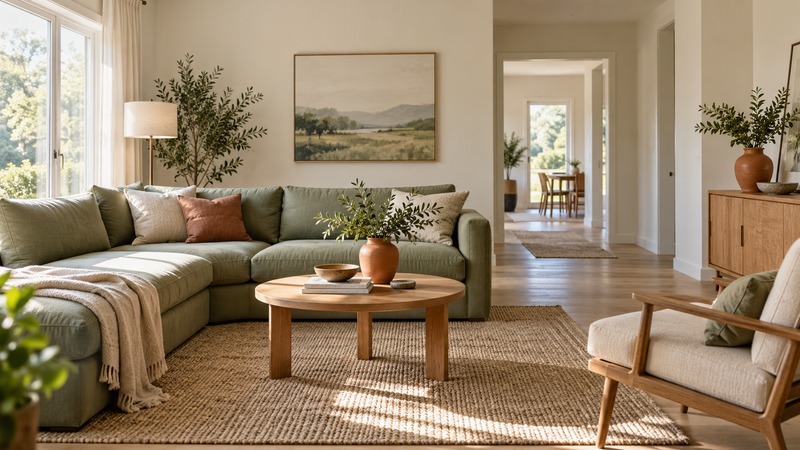
Before choosing a symbolic color, list the large surfaces that are staying: floor, sofa, rug, curtains, built-in cabinets, and stone or brick. These items already set the room’s undertone. A cool gray wall can feel disconnected beside honey-colored wood, while a warm ivory may connect the same materials without requiring a full renovation.
Then check the room’s function. A living room used for conversation may need a different balance from one used mainly for television, children’s play, or work. Color should support the real routine. It cannot fix a blocked doorway, an unstable shelf, insufficient light, or furniture that makes the walking path awkward. Review the broader feng shui living room layout before treating paint as the first solution.
How five-element colors are used
Many contemporary feng shui guides connect colors with the five phases, often translated as wood, fire, earth, metal, and water. Common associations include green with wood, red with fire, yellow or brown with earth, white or gray with metal, and black or deep blue with water. Exact shades and applications vary by school, teacher, direction, and household context.
Use those associations as a vocabulary for emphasis rather than a rigid formula. A green cushion can introduce a wood reference without turning every wall green. A clay-colored vase can supply a warm earth tone without claiming that the object changes a person’s fate. Materials also matter: an oak table, wool rug, metal lamp, and glass surface contribute texture and visual weight even when their colors are quiet.
| Traditional phase | Common color references | Low-risk living-room use | Practical caution |
|---|---|---|---|
| Wood | Greens and blue-greens | Upholstery, plants, art, or a muted wall | Living plants still need suitable light and care |
| Fire | Reds, coral, orange, strong pink | Small textiles, artwork, or a warm focal object | Highly saturated red can dominate a compact room |
| Earth | Ochre, sand, beige, clay, brown | Rugs, ceramics, plaster tones, and natural fibers | Too many similar browns can look flat without contrast |
| Metal | White, gray, and metallic finishes | Light walls, frames, lamps, and hardware | Cool gray can shift blue beside cool lamps |
| Water | Black, navy, and deep blue | Frames, a chair, cabinet, or controlled accent wall | Large dark areas need enough daylight and task lighting |
Test color in daylight and at night
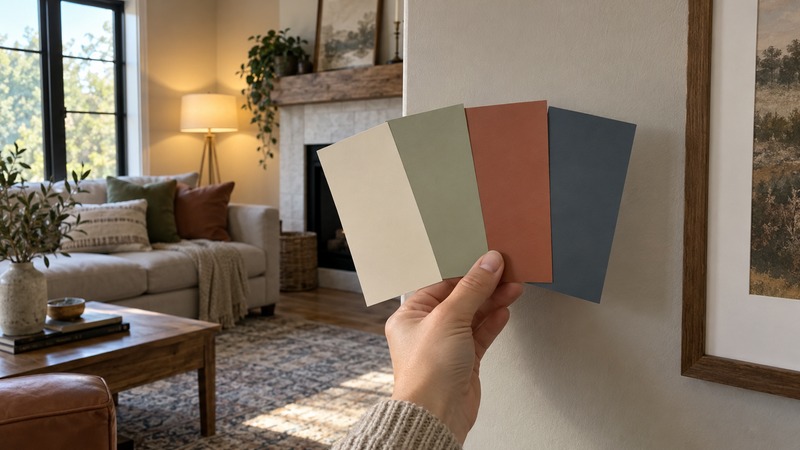
Color is not seen independently of light. The U.S. Department of Energy explains that correlated color temperature describes whether a lamp appears warmer or cooler, and the Illuminating Engineering Society defines color rendering as the degree of color shift under a light source compared with a reference. That means the same painted wall can look cream in morning sun, dull beside a cool bulb, and warmer under a 2700 K lamp.
Paint at least two large sample boards instead of relying on a small chip. Move them to the wall behind the sofa, the darkest corner, and the wall facing a window. Check them in the morning, late afternoon, and after the usual lamps are on. The DOE also notes that wall, ceiling, floor, and furniture colors affect how well daylight and electric light work in a space; light finishes generally reflect more light.
- Keep the sample beside the permanent floor and largest furniture item.
- Photograph it only as a record; make the final judgment in the actual room.
- Compare it under every lamp that will remain in use.
- Wait at least a day before committing to the whole wall.
Choose a palette by room condition
Low-light living room
Use a light or mid-value base with enough warmth to avoid looking gray in shadow. Add contrast through wood, dark frames, or a single deeper textile. Painting everything stark white will not create daylight; it may instead emphasize flat artificial light. Improve lamps and window access together with the palette.
Bright south- or west-facing room
Strong sunlight can intensify warm paint and create glare on pale glossy surfaces. Muted greens, mineral blues, warm grays, or matte earth tones can feel balanced, but test them at the brightest time of day. Curtains or shades should control glare without blocking the route through the room.
Open-plan living and dining area
Repeat the same base color across connected walls, then distinguish zones with rugs, lighting, art, or one related accent. Abrupt color changes at an arbitrary line can make the plan feel fragmented. A shared wood tone or repeated textile color usually creates better continuity.
Small living rooms can still use deep color
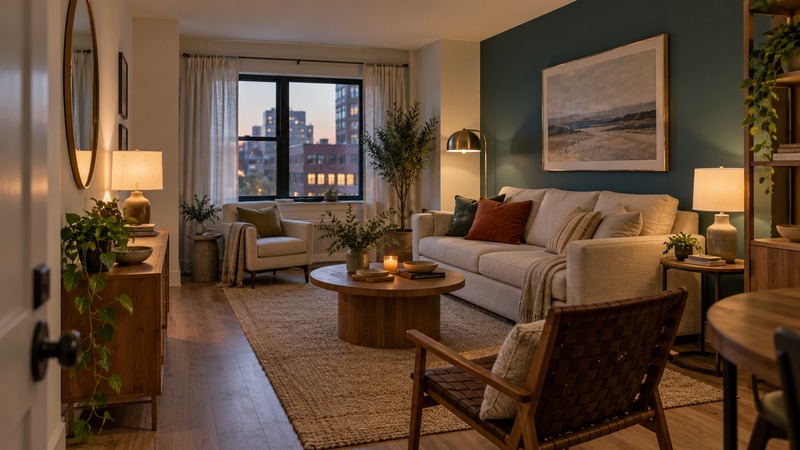
A small room does not have to be pale from floor to ceiling. One deeper wall, cabinet, or chair can give the eye a stable focal point. Keep the remaining large surfaces quieter, leave visible space around key furniture, and provide more than one light source. This creates contrast without turning every object into a competing accent.
Do not buy a new sofa simply because its color does not match a chart. Start with removable textiles and artwork. If the seating itself is the problem, review living room sofa placement and confirm the path around it before spending money on a new finish.
Common color mistakes
- Assigning one lucky color to everyone: household preferences, daylight, existing materials, and school of practice all change the decision.
- Using five bright colors at equal strength: the symbolic list is not a requirement to display every phase prominently.
- Ignoring undertones: green-gray, blue-gray, and warm gray behave differently beside wood and fabric.
- Choosing from a phone screen: display settings and photos cannot reproduce the room’s real light reliably.
- Using color to cover a layout problem: paint cannot make a narrow route wider or make unsafe furniture stable.
- Expecting a color to guarantee an outcome: use feng shui color as cultural design guidance, not a prediction of wealth, health, or relationships.
A simple selection method
- Photograph and list every large item that will stay.
- Choose one low-intensity base that works with the floor and sofa.
- Select one supporting color already present in wood, stone, art, or textiles.
- Add one optional accent linked to the mood or traditional phase you want to reference.
- Test large samples in daytime and evening light.
- Make reversible changes first, then paint or buy large furniture only after the palette works for a week.
Frequently asked questions
What is the best feng shui color for a living room?
There is no single best color for every home. Start with the room’s light, fixed materials, and daily use. Then use a five-element association as an optional symbolic layer rather than a universal rule.
Can I use gray in a feng shui living room?
Yes. Gray is often connected with the metal phase in contemporary guides. Choose a warm, neutral, or cool gray that works with the floor and bulbs, and add wood or textile texture so the room does not feel flat.
Is red too strong for the living room?
Red can work as a small accent in art, cushions, or ceramics. A saturated red wall has much more visual weight, so test it carefully in a bright or compact room. No color automatically creates good or bad fortune.
Should the living room color match its compass direction?
Some feng shui schools use direction-based correspondences, while others weigh form, layout, timing, or household context differently. If you follow a specific school, use its complete method. Do not choose a color from one isolated chart and treat it as certain.
How many colors should I use?
A practical starting point is one dominant base, one supporting tone, and one accent. You can use more shades when they are related, but repeat them intentionally and keep the largest surfaces calm enough for the room’s normal activities.
Sources and further reading
- U.S. Department of Energy: correlated color temperature and color rendering
- U.S. Department of Energy: interior finishes and daylight reflection
- Illuminating Engineering Society: color rendering index definition