Quick answer
A bed can physically face a mirror. Many contemporary feng shui guides prefer that a mirror does not reflect the sleeper, especially when it sits directly across from the bed. Treat that as cultural design guidance, not a proven health rule. If the reflection, light, or movement catches your attention at night, angle, move, or cover the mirror and test the room for several nights. Secure mounting, an open walkway, and a dark, quiet sleep environment matter more than following one rigid placement rule.
Basic facts
| Question | Practical answer |
|---|---|
| Is a mirror opposite the bed forbidden? | No universal building or health rule forbids it. Feng shui schools and modern teachers vary. |
| What counts as “facing” the bed? | Usually, you can see part or all of the bed in the mirror while lying down. |
| What is the easiest fix? | Change the mirror angle or cover it at night. |
| When should you move it? | Move it if reflected light, movement, glare, or the view itself disturbs you. |
| What matters for safety? | Stable mounting, no sharp obstruction, and a clear route around the bed. |
First, check what the mirror actually reflects
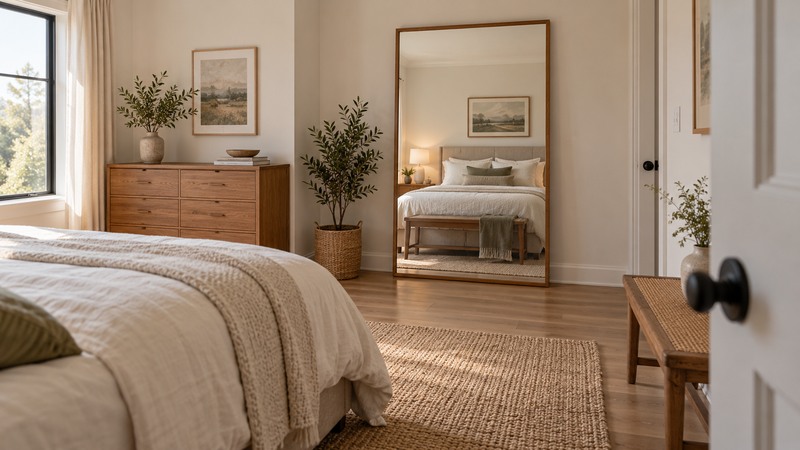
Stand or lie where your head normally rests. A mirror directly opposite the bed may show your whole body; a side mirror may show only a corner of the mattress; an angled mirror may show the wall instead. These are different layouts, so they do not need the same response.
Before changing furniture, check the room after dark. Notice whether headlights, streetlights, a television, or someone moving through the doorway appears in the glass. The reflection may feel more noticeable at night than it does during the day.
Why many feng shui guides avoid a mirror facing the bed
Feng shui is a traditional practice with several schools and later interpretations. A systematic review of empirical feng shui research describes the tradition's long history while also finding that effects on human outcomes remain undetermined. That evidence boundary matters: bedroom mirror advice is best understood as a cultural placement preference and a way to evaluate how a room feels, not as a medical conclusion.
Contemporary practitioners commonly focus on visual activity. A mirror doubles what appears in the sightline. If it reflects the doorway, a window, or another person turning in bed, that added movement may make the room feel less settled to someone who is sensitive to it. Other people sleep comfortably with the same arrangement.
Use comfort and sleep conditions as the practical test
The National Institutes of Health recommends a bedroom that is quiet, cool, and dark. A mirror can matter when it redirects outdoor light, a lamp, or a bright screen toward the bed. If none of those things happen and the reflection does not bother you, there may be no practical reason to rearrange the room.
Try a simple comparison:
- Cover the mirror for three to seven nights.
- Keep bedtime, lighting, and curtains as consistent as possible.
- Note whether you fall asleep more easily or wake less often.
- Uncover it and compare, without assuming one night proves a pattern.
This small test gives you information about your room and preferences. It does not diagnose a sleep disorder. Persistent sleep problems deserve advice from a qualified health professional.
Fixes, from easiest to most involved
Change the angle
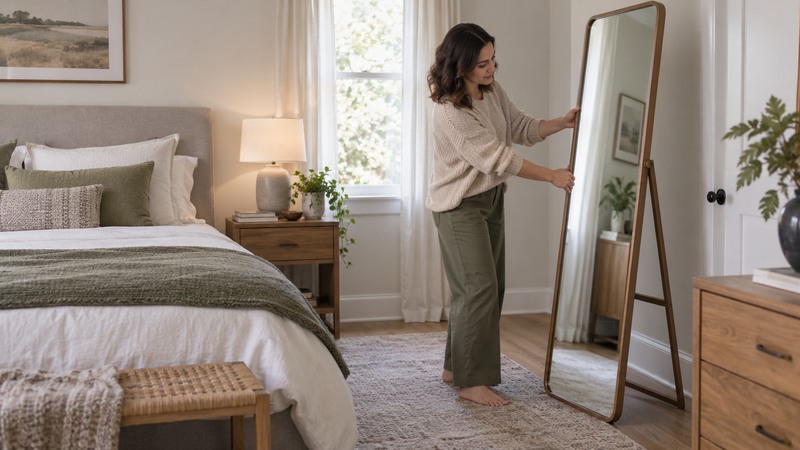
Rotate a freestanding mirror a few degrees so it reflects a wall, artwork, or an open part of the room instead of the mattress. This preserves the mirror's function and costs nothing. Make sure the stand remains stable after you move it.
Shift the mirror or the bed
Moving the mirror to a wall beside the bed often removes the direct reflection. If you consider moving the bed, check door clearance, outlets, windows, and walking space first. The best position is one you can use safely every day. Our broader guide to feng shui bedroom layout can help you compare the whole room rather than one object.
Cover the mirror at night
For a mirrored wardrobe, use its doors if they already slide over the reflective panel. A light curtain on a secure track can work in a rental. A fitted fabric cover suits a standing mirror. Keep loose fabric away from heaters and make sure it cannot create a trip hazard.
Reduce reflected light
Blackout curtains, dimmer bedside lamps, and moving bright electronics out of the mirror's sightline may solve the actual problem. This aligns with general bedroom feng shui planning because it considers light, circulation, and the complete resting area.
Quick reference by room situation
| Situation | First thing to try | Check before keeping it |
|---|---|---|
| Freestanding mirror opposite the bed | Rotate it toward a side wall | Base is stable and cannot tip |
| Mirrored closet doors | Close a curtain or panel at night | Track is secure and walkway stays clear |
| Mirror beside the bed | Check the view from the pillow | No glare or startling movement |
| Mirror reflects the bedroom door | Adjust its angle slightly | You can still use the mirror comfortably |
| Small rental room | Use a removable cover | No adhesive damage or loose fabric |
| Mirror reflects a window | Change angle or control outdoor light | Daylight remains useful when wanted |
Small bedrooms and rentals
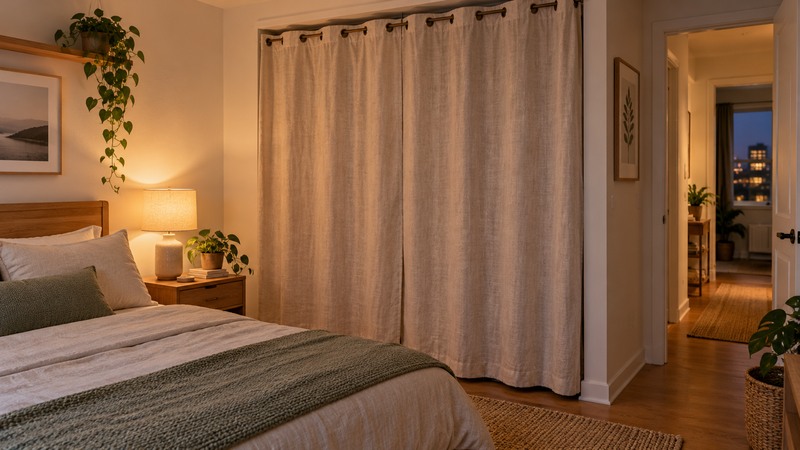
In a compact room, a mirror may make the space feel brighter and help with dressing. You do not need to remove a useful feature simply to follow a general rule. Start with reversible changes: turn the mirror, change the lamp angle, close wardrobe doors, or hang a removable panel.
Do not block the route to the door or force the bed beneath a window solely to avoid a reflection. If those are the only options, compare all the trade-offs. The guide to a bed under a window explains how to weigh light, drafts, noise, and access.
Frequently asked questions
Is it bad feng shui to see yourself in a mirror from bed?
Many contemporary feng shui guides discourage a mirror that reflects the sleeper, but practices vary. Treat the advice as a placement preference. If the reflection feels distracting, angle or cover the mirror and compare how the room feels.
Can a mirror be beside the bed?
Yes. A side position often avoids a direct reflection. Check the view from the pillow, glare from lamps or windows, stable mounting, and enough space to walk safely.
Should I cover my bedroom mirror every night?
Only if it helps you. A temporary cover is a simple test and a useful rental-friendly fix. Secure it so that fabric cannot fall, snag, or obstruct the floor.
What if the mirror is attached to a wardrobe?
Try closing an existing door or adding a properly installed curtain or removable panel. If the reflection causes no discomfort or light problem, replacing the wardrobe may be unnecessary.
Does a mirror facing the bed cause poor sleep?
There is no good evidence that the placement itself causes poor sleep. A mirror can redirect light or show movement, which may bother some people. Prioritize a dark, quiet, cool room and seek medical guidance for persistent sleep difficulty.